
When Rocio showed up at our parish, she knew nothing about the Catholic Church. All she knew was that her life was filled with darkness and she hungered for something more. It was January, and our Rite of Christian Initiation of Adults (RCIA) sessions had begun months before. So our catechetical team asked Rocio to come to Mass each Sunday and hang out with the community. We hoped this would keep her interested until she could join the next RCIA in the fall and we could teach her about becoming a Catholic.
Rocio came to Mass every Sunday and sat with several people we had asked to keep her company. After Mass they would go out for coffee and answer her questions, basic things such as, “Why do you put your hand in that water?” or “Where do you find all those readings in the Mass?” They introduced Rocio to their friends and other parishioners. Some of them invited her to their homes for dinner. Others told her about their Bible study group and made plans to bring her when she was available.
Some young adults close to Rocio’s age discovered they shared a love for cooking, and Rocio became a regular at their monthly cuisine nights. Rocio saw a bulletin announcement about the rosary and asked her new Catholic friends about it. They connected her with the parish rosary group and accompanied her to one of their gatherings. The group heard Rocio was coming and gave her a rosary of her own. They were so patient with her that day, teaching her how to pray this devotion they loved as she imitated their gestures and prayerful demeanor. When they saw her at Mass, they would always stop to chat with her.
That summer the parish was going to Tijuana for an annual service trip at an orphanage. Rocio’s new parish friends convinced her to go with them. She fell in love with the kids there, and her previous shyness gave way to an exuberant personality.
Meanwhile my RCIA team had been meeting every Wednesday night with that year’s catechumens, candidates, and their sponsors. We had our lessons neatly scheduled and our Powerpoints all planned. By the time Easter came we had covered all our topics, but our biggest challenge every year was keeping the newly initiated involved in the parish. No matter how much we encouraged them to be part of the community after Easter, they still lamented that they “couldn’t be part of RCIA anymore” or disappeared from the parish altogether.
Click here to continue reading this article.


Developed in partnership with the Dioceses of Evansville and Owensboro, Saint Meinrad Seminary and School of Theology offers an intensive formation opportunity to equip you for catechetical leadership in the 21st century:
For more information click here.
Registration Fee:
General registration is $630.
Participants from the Archdiocese of Louisville are eligible for financial assistance.
Contact Art Turner for information.

Mural of characters from “Where the Wild Things Are,” at a Thundercloud Subs shop in Austin, Texas
First holy Communion is celebrated in May at our parish. We’ve structured our program around a parent-centered role, honoring them, as the church does, as “the first and best” teachers of the faith. So when I suggested a book they could read with their children to help them better understand the feast to which they are welcomed, I chose a book many parents know well, one which most of us have read aloud to a child: Where the Wild Things Are, by Maurice Sendak.
Sendak was neither a theologian nor a Christian, but he wrote an enduring story that begins and ends with a meal and a table, a table that remains waiting for the child even when the child abandons the table in search of more exotic pleasures. He writes of a meal that is never hidden from us, of a table that is always full, always welcoming.
The book begins on the night “Max wore his wolf suit and made mischief of one kind and another.”
Sendak writes, “His mother called him “WILD THING!” and Max said, “I’LL EAT YOU UP!”
There is nothing sweet about a wolf. No child goes to bed cuddling his stuffed wolf. Wolves are always the villains (“I’LL EAT YOU UP!”) and never the heroes. The wolf suit stands for all the ways we disguise and disfigure our humanity with sin. It separates us from ourselves and from others, in this case the most vital other, Max’s mother. “Mischief of one kind and another” is storybook language for the real damage our disfigured humanity wreaks, upon other people and upon the created world.
by Emily Reimer-Barry
https://catholicmoraltheology.com/
In Gaudete et Exsultate, Pope Francis reaffirms the universal call to holiness and says that he explicitly wishes to propose it “in a practical way for our own time, with all its risks, challenges, and opportunities” (2). My colleagues David Cloutier and Matthew Shadle have already reflected on key themes of the document here and here, so I will try to avoid repeating what they have articulated so well already. I will focus on the theme of spirituality in everyday life, and especially on how the pope describes ordinary work as a path of sanctification. As a lay woman theologian who is also a working mom, my daily life combines both reflection on the reality of God and mundane tasks to keep the family going. But it would be a mistake to think that one is superior to the other in terms of bringing me closer to God.
Much of what Pope Francis writes about regarding holiness in ordinary life is not new. Ignatian spirituality has been a resource for many Christian seekers who have found encouragement to “find God in all things.” Kathleen Norris, in her 1998 Madeleva Lecture in Spirituality, “The Quotidian Mysteries: Laundry, Liturgy, and Women’s Work,” draws on monastic traditions and feminist theology to help readers think about how daily work can be a place for finding God. Wendy Wright, James Martin, SJ, Henri Nouwen, Gregory Boyle, SJ, and many others have written about the spiritual life and finding God in unlikely ‘everyday’ places.
Here are some of the messages I found most life-affirming in Gaudete et Exsultate:
Click here to continue reading this article.
Parishes and individual Catholics will find much wisdom in Pope Francis‘ new exhortation Gaudete et Exsultate (“Rejoice and Be Glad“), a document many say is practical, accessible and applicable to the challenges in today‘s U.S. church and society.
Calling it “one of the most important magisterial documents on holiness since Vatican II,“ Chicago Cardinal Blase Cupich said the pope has given Catholics an accessible “guide to holiness“ that “urges us in a very practical way to cultivate a disposition of mercy toward the other.“
In particular, he hopes the document‘s section on the Beatitudes would be adopted in church programs for adults and young people alike, from parish study groups, to RCIA, to marriage preparation.
“Just as his reflection on 1 Corinthians in Amoris Laetitia offers practical insights for married couples and those preparing for marriage, so now a meditation on the Beatitudes in Gaudete will prove to be an enormously rich resource for Catholics at all stages of faith formation,“ Cupich told NCR in an email interview.
Those who work in lay ministry, religious education and pastoral care in parishes and dioceses agree the document will be useful in their work, especially when they encounter “push back“ from Catholics who see faith only as intellectual assent to a series of beliefs.
Instead, in Gaudete et Exsultate, released April 9, the pope stresses the importance of both prayer and action — specifically mentioning the plight of migrants — in discernment toward holiness that goes beyond merely following rules.
To continue reading this article click here.
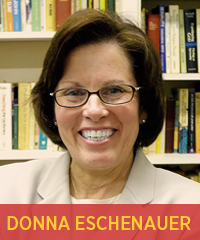 Presented by Donna Eschenauer, PhD on Thursday, April 12, 4 p.m. EDT
“From ancient times the conferring of the gift of the Holy Spirit has been carried out in the Church through various rites. These rites have undergone many changes in the East and the West, but the significance of the conferral of the Holy Spirit has been kept” (The Order of Confirmation, Apostolic Constitution on the Sacrament of Conformation).
Explore the innate meaning of the Sacrament of Confirmation with Donna Eschenauer, PhD. Through practical application and questions for reflection, you’ll see how the gift of the Holy Spirit is the beginning of a life-long journey with Christ.
 Presented by Lori Dahlhoff, EdD on Tuesday, April 17, 4 p.m. EDT
Every era of human history faces challenges in forming and educating members of faith communities.
In this unique webinar, you’ll discover tools available to catechists, teachers, and leaders in the digital age. Lori Dahlhoff, EdD, explores educational practices including backward design and micro-learning, and how they’re natural and effective tools for forming faith at all ages.




 Formed In Faith