
Rachel Held Evans is a blogger and the author of “Searching for Sunday: Loving, Leaving, and Finding the Church.”
Formed In Faith
Sharing the Word through Faith Formation, Archdiocese of Louisville
RCIA TEAM DAY JUNE 13, 2015
Coming Fully Alive: Conversion in the RCIA
June 13, 2015 9:30 a.m. – 3:00 p.m.
St. Stephen Martyr, Weiker Room
3105 Greenup Road
Louisville, KY 40217
Cost: $25.00 per person (includes lunch)
What do we mean by “conversion”? Can we recognize how and when it emerges? Michael Marchal will help us to identify the multiple aspects of conversion and ponder how a living faith takes root and develops.
In the morning, we will explore the various components of the conversion process and examine how they are at work in our own lives and in the lives of catechumens and candidates. In the afternoon, we will examine the liturgical rites from the same conversion perspective.
Michael H. Marchal holds degrees from Xavier University in Cincinnati, Ohio, and Fordham University in New York City. He is a retired high school teacher of more than forty years, most of those at St. Xavier High School in Cincinnati. During that time he has been involved with worship at Bellarmine Chapel at Xavier University and has served a term on the Archdiocese of Cincinnati worship commission. He has published numerous articles on education and on liturgy and three books: Parish Funerals (Liturgy Training Publications, 1987); Adapting the Liturgy: Creative Ideas for the Church Year (Resource Publications, Inc., 1989); and The Spirit at Work: Conversion and the RCIA (World Library Publications, 2010). Michael’s hobby is cooking, and he enjoys exploring a wide range of cuisines.
To register, see the form below or contact Linda McLemore.

For additional information, please contact Maureen Grisanti Larison by email or at (502) 448-8581, ext. 1308.
Sponsored by the Archdiocese of Louisville, Office of Lifelong Formation and Education
Religiously Unaffiliated Outnumbering Catholics In Recent Poll
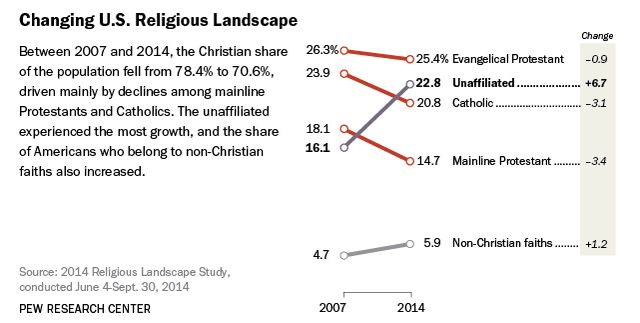
A Pew research study in religious practices, in the U.S. today, shows a drop off in those who self-identify as Christians, losing 8 percent since 2007 (-3.1% among Catholics). Still, Christians make up 70 percent of the country’s religious individuals. Meanwhile those that identify with no religion (the “nones”) has grown larger, eclipsing some mainstream groups such as Roman Catholics.
What’s it all mean? Listen to this short, lively interview.
The Source: Religiously Unaffiliated Outnumbering Catholics In Recent Poll
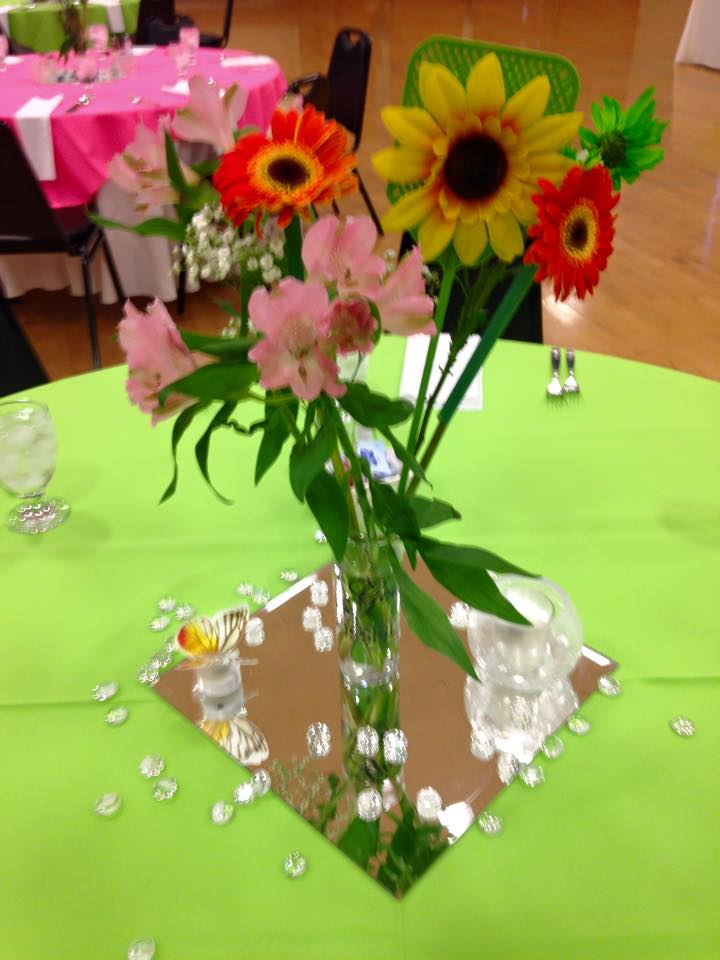
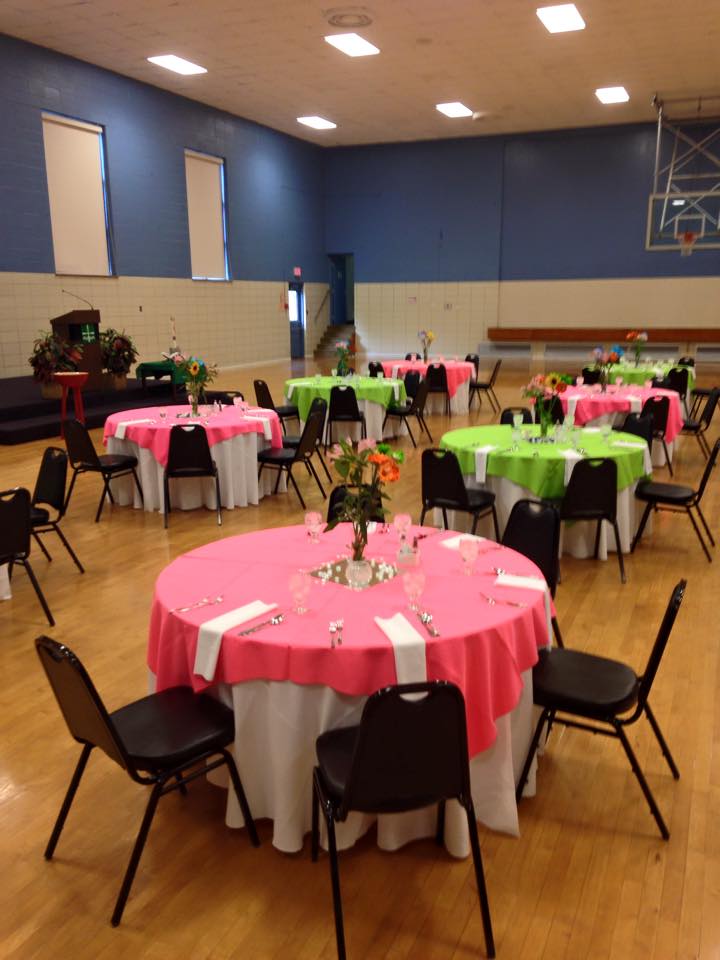
End of the Year PCL Luncheon

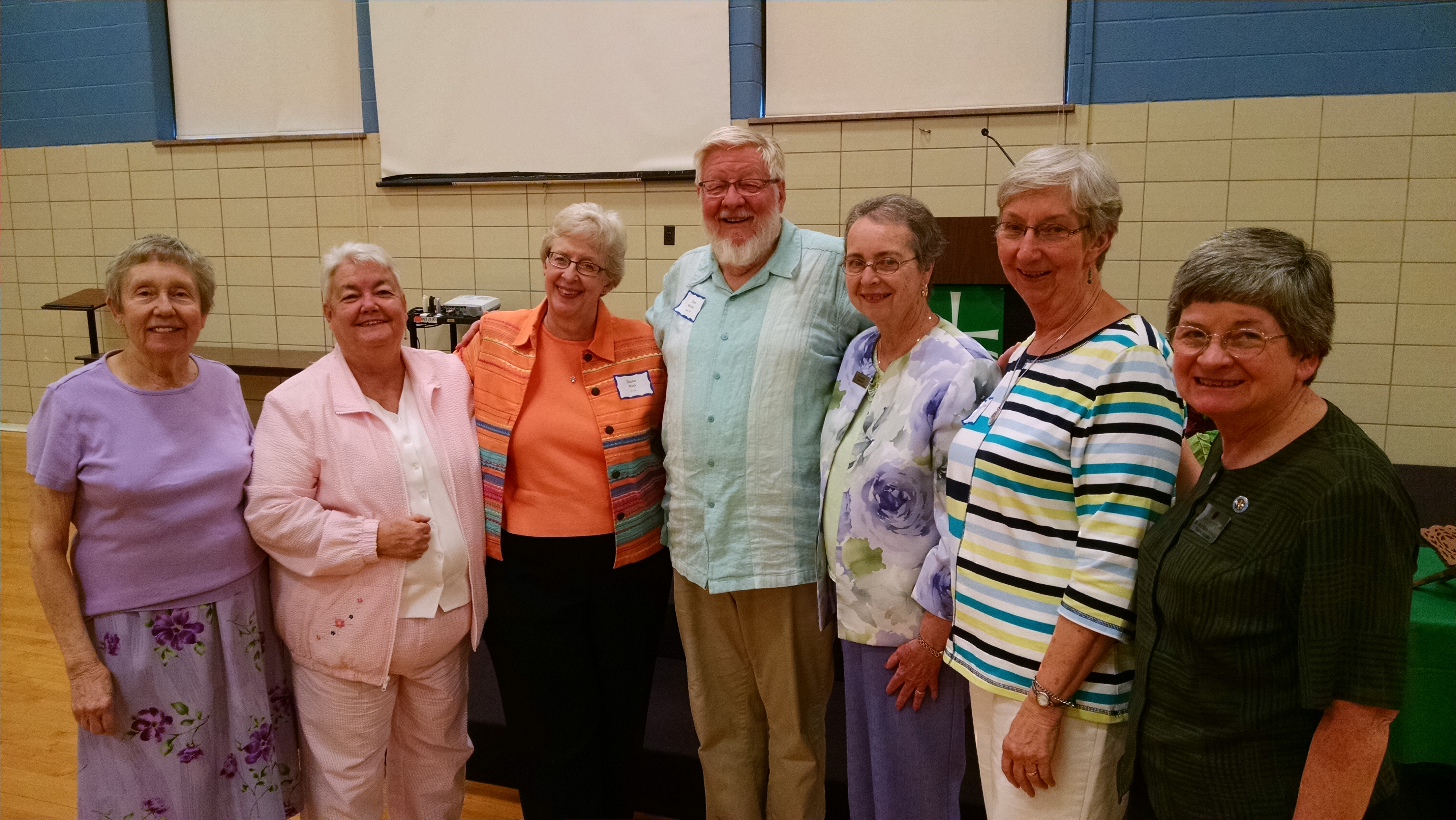
Our Retirees: Sr. Marian, Sr. Betty, Diane, Tom, Jan, Sr. Mary Caroline, Sr. Ann
-

- The Sign of Peace during our opening prayer.
-

- We played Arch Lou Jeopardy.
-

- PCLs were treated to relaxing massages.
“It is requisite for the relaxation of the mind that we make use, from time to time, of playful deeds and jokes.”
—St. Thomas Aquinas
Author Calls for Formation to Meet Challenge of Social Media

(Dreamstime)
We have seen how the use of a simple hashtag can set hearts on fire. Think about the influence of #JeSuisCharlie, #ICantBreathe and #ArabSpring. The power of digital communication is a promise and a threat, a technological wonder and a ticking time bomb.
In Connected Toward Communion: The Church and Social Communication in the Digital Age, author Daniella Zsupan-Jerome acknowledges the unbounded nature of the Internet. “Contributions range freely from the socially conscious Ushahidi to the lolcat, from expert commentary to memes, from words of affirmation to vile comments. It is no longer plausible to imagine an ethical code of conduct that could rein all these in.”
Interactive Web 2.0 technology has allowed the roles of audience and author to merge, and any hope of civility or community must rise from within. The Catholic church has long been conscious of the need for policies regarding the mass media. Church leaders, especially since the Second Vatican Council, have grappled with the problems and potential of what they refer to as “social communication.”
Click here to read the complete article.

CONNECTED TOWARD COMMUNION: THE CHURCH AND SOCIAL COMMUNICATION IN THE DIGITAL AGE
By Daniella Zsupan-Jerome
Published by Liturgical Press, $17.95
Want millennials back in the pews? Stop trying to make church ‘cool.’
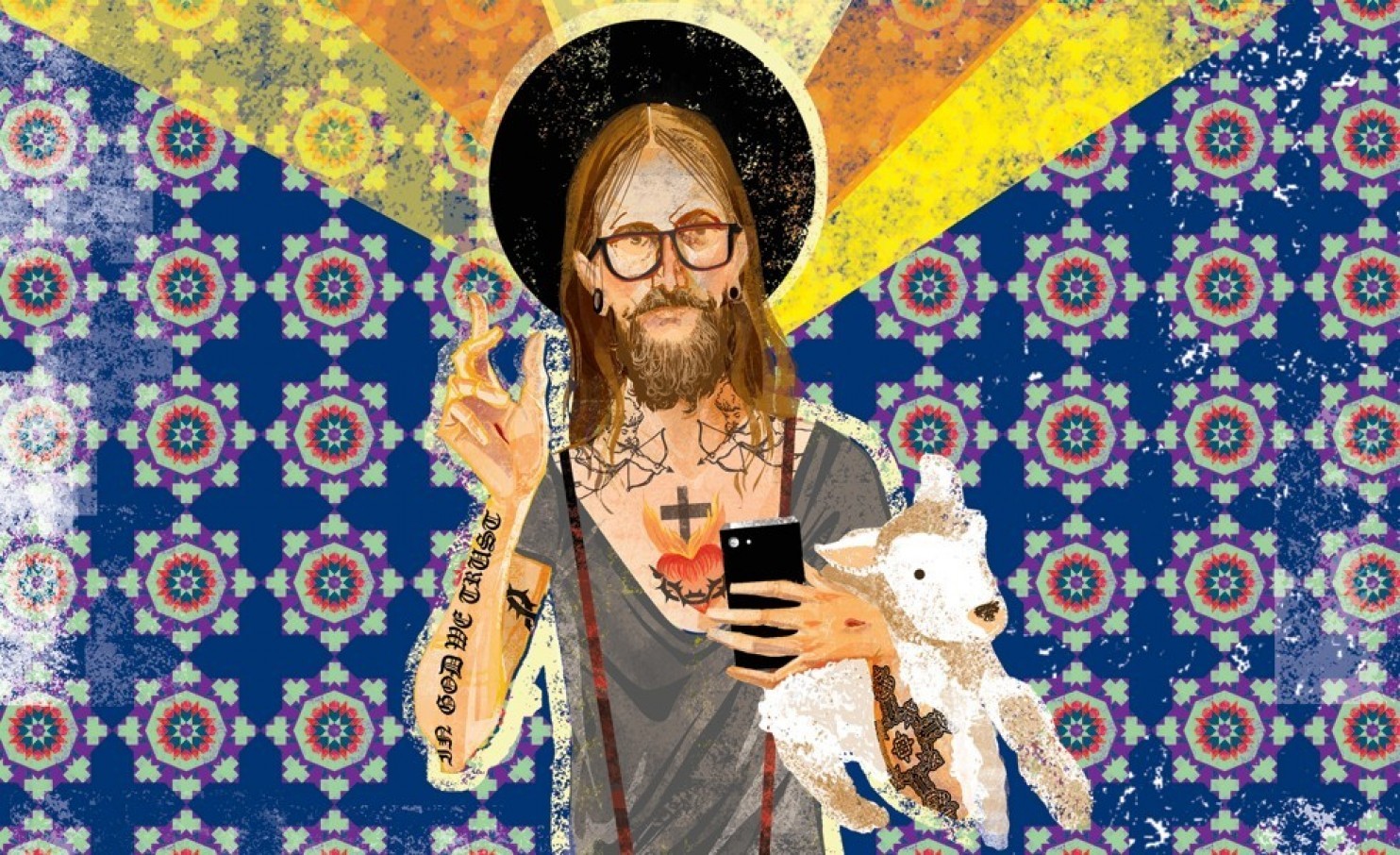
(John Jay Cubuay/for The Washington Post)
Bass reverberates through the auditorium floor as a heavily bearded worship leader pauses to invite the congregation, bathed in the light of two giant screens, to tweet using #JesusLives. The scent of freshly brewed coffee wafts in from the lobby, where you can order macchiatos and purchase mugs boasting a sleek church logo. The chairs are comfortable, and the music sounds like something from the top of the charts. At the end of the service, someone will win an iPad.
This, in the view of many churches, is what millennials like me want. And no wonder pastors think so. Church attendance has plummeted among young adults. In the United States, 59 percent of people ages 18 to 29 with a Christian background have, at some point, dropped out. According to the Pew Forum on Religion & Public Life, among those of us who came of age around the year 2000, a solid quarter claim no religious affiliation at all, making my generation significantly more disconnected from faith than members of Generation X were at a comparable point in their lives and twice as detached as baby boomers were as young adults.
In response, many churches have sought to lure millennials back by focusing on style points: cooler bands, hipper worship, edgier programming, impressive technology. Yet while these aren’t inherently bad ideas and might in some cases be effective, they are not the key to drawing millennials back to God in a lasting and meaningful way. Young people don’t simply want a better show. And trying to be cool might be making things worse.
Click here to read the entire article.
R.I.P. Deacon Thomas Box
We mourn the passing of Deacon Box, husband of the Parish Catechetical Leader, Mrs. Becky Box, at St. Bartholomew Parish.

Thomas Edward Box
Thomas Edward Box 68, passed away April 21, 2015.
Born in Bremerton, WA on October 17, 1946, Tom was a son of the late Thomas E. Box and Margaret Mann.
Also preceding him in death were a brother Clifford Burk and a brother-in-law Tony Ferguson.
He attended and was a graduate of DuPont Manual High School and in 1997 received his BS from Indiana University Southeast.
Tom worked 25 years for Bell South and 15 years with Acuative. He was ordained a Permanent Deacon in the Archdiocese of Louisville in 1984, and was assigned to Resurrection Church and presently assigned to both St. Bartholomew and St. Ignatius Parishes. He served his country in the Army during the Vietnam War.
Survivors include his wife, Mary E. “Becky” VonBokern Box; three sons, Shannon Box (Brittany), Greg VonBokern and Jamie Box; his little buddy “Kirby”; four grandchildren, Zoe, Shane, Joe and Jacob Box; and four sisters, Sharon Ferguson, Vonda Lockhart (Leland), Velva Thomas (Joe) and Patricia Glotzbach (Chalk). Tom is also survived by several nieces, nephews and their children; a host of family and friends, most especially are the parishioners of St. Bartholomew.
A Mass of Chrisitian Burial was celebrated on Wednesday, April 29, 2015, at St. Bartholomew.
Memorial gifts may be directed to St. Bartholomew Church or to SEAM, 6500 Six Mile Lane, Louisville, KY 40218.
– See more at: http://www.legacy.com/obituaries/louisville/obituary.aspx?pid=174718268#sthash.4u9uPQBE.dpuf
Bishop plans to return sacraments of initiation to “their proper order”

Below is part of a letter issued by Bishop Larry Silva, from Honolulu:
Dear parents, priests, deacons, youth ministers, faith formation staff and Catholic school administrators,
I am writing this letter to invite you to take an active role by reading the articles regarding the plan to return the sacraments of initiation to their proper order in our diocese, that is: Baptism, Confirmation, and then First Holy Communion. A series of articles explaining the history of the sacraments of initiation, changes to the way children will prepare for these sacraments, and the importance of having comprehensive youth ministry programs in our parishes will be published in the next issues of our Hawaii Catholic Herald. Education plays a most important role in this process, so I invite you to be part of the process. The proposal to return the sacraments of initiation to their proper order has already been discussed with the Presbyteral Council and the Diocesan Pastoral Council. Both groups strongly favored the plan.
If one looks at the “Catechism of the Catholic Church,” one notes that the first three sacraments are covered in the proper theological order. Our baptismal covenant with God is sealed in Confirmation; the two sacraments go together like Easter and Pentecost. Received third, the Holy Eucharist is then seen as the summit of initiation. “The Holy Eucharist completes our Christian initiation” (“Catechism” 1322).
Over the course of history in the Western (Latin) Church, great emphasis was placed on the importance of Baptism soon after birth, opening the door of salvation to our youngest members. Unfortunately, delays started occurring with the reception of Confirmation and First Holy Communion. Pope St. Pius X in 1910 addressed the problem of children receiving First Holy Communion at too late an age and directed that children be given Holy Communion at the age of reason, that is, about age 7. This resulted, however, in the sacraments being given out of order. Current practice is like counting 1, 3, 2.
Click here to read the entire letter.

Click here to view the video of Msgr. John Zenz from the Archdiocese of Detroit, as he explains the Sacrament of Confirmation.

Hawaii educational videos on three sacraments (Baptism, Penance, and Eucharist) gain national recognition.
Order Your 2015 Catechetical Sunday Resources!
 The National Conference on Catechetical Leadership (NCCL.org) has available 2015 Catechetical Weekend (Sept. 19-20) resources. The theme for 2015 is “Safeguarding the Dignity of Every Person.”
The USCCB Committee on Evangelization and Catechesis developed the materials in collaboration with additional Bishops’ Secretariats and Offices. Resources include background articles, lesson plans, artwork, prayers, reflections and more. They were designed with parish catechists, Catholic school teachers, school principals, diocesan leaders and, of course, local PCLs, etc., in mind.
Find USCCB-approved materials here.
Special Intention Prayer for Catechetical Leaders Experiencing Change & Transition(s)

For Peace Within
May today there be peace within.
May you trust God that has you are right where you are meant to be.
May you not forget the infinite possibilities born of faith.
May you use your gifts to pass on the love that has been given to you.
May you be confident in knowing you are a child of God.
Let this presence settle into your bones, and allow you to freely sing, dance, praise and love.
It is there for each and every one of us.
Attribution to St. Therese of Lisieux




 Formed In Faith